


Bone Grafting
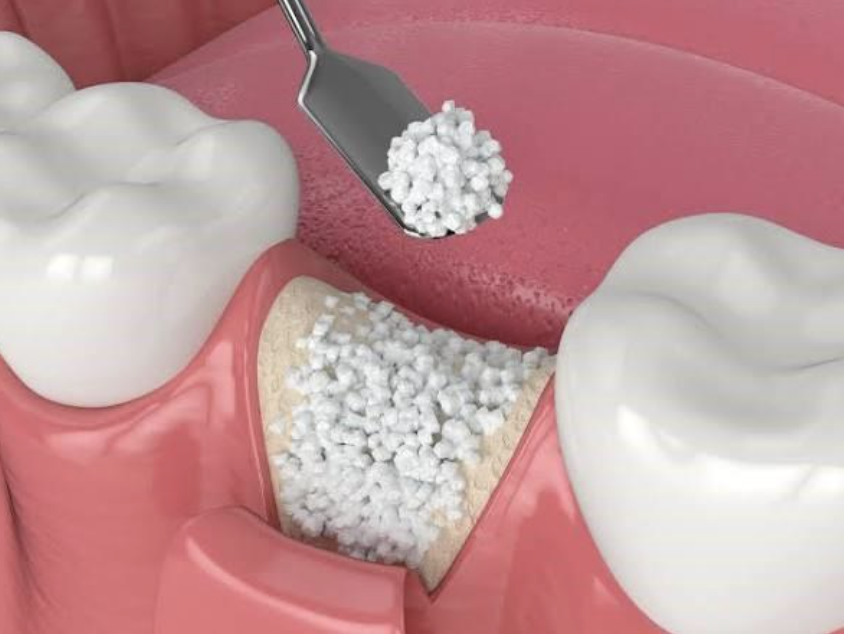
Grafting is the process of replacing or augmenting missing bone tissue in the jaw to support dental implants or to repair fractures. It involves placing graft material that acts as a "scaffold," encouraging your body's natural bone cells to grow and eventually replace the graft with new, living bone.
-
Dental Implants: Rebuilding a jawbone that has thinned due to tooth loss, ensuring it is thick enough to hold an implant post.
Socket Preservation: Placing a graft immediately after a tooth extraction to prevent the surrounding bone from shrinking.
Sinus Lift: Adding bone to the upper jaw when there isn't enough height below the maxillary sinus for an implant post to be placed.
-
Procedure: Usually performed under local anaesthesia with IV sedation if requested.
Immediate Recovery: Initial healing of the gums takes about 7–10 days. Minor swelling and discomfort are normal and can be managed with standard pain relief.
Long-term Healing: It typically takes 3–9 months (and up to a year) for the graft to fully integrate and fuse with your natural bone.
The success of a bone graft depends on a combination of biological properties, surgical precision, and patient-specific habits. While clinical success rates are generally high, several key factors determine how well the graft integrates and matures.
-
For a graft to succeed, it must fulfill specific biological roles that allow it to bond with your natural bone:
Osteoconduction: The material acts as a physical scaffold, allowing your own bone cells to migrate into the site and grow.
Osteoinduction: The graft contains proteins that "trigger" or recruit your body’s stem cells to turn into bone-forming cells (osteoblasts).
Osteogenesis: The material provides live bone-forming cells directly to the site. This is unique to autografts (your own bone), which is why they remain the "gold standard" for predictability.
-
Your body's ability to heal is often the deciding factor in graft integration:
Smoking/Vaping: This is the most significant risk factor. Nicotine constricts blood vessels, depriving the healing site of the oxygen and nutrients it needs. Smoking can triple the risk of failure and delay recovery by up to 50%.
Quitting smoking or vaping is highly recommended.
Nicotine—regardless of how it is consumed—acts as a vasoconstrictor that restricts blood flow, significantly slowing bone healing and increasing the risk of graft failure.
Reduced Blood Flow: Nicotine in cigarettes and vape liquid narrows blood vessels, depriving the graft of the oxygen and nutrients it needs to integrate.
Cell Damage: Chemical aerosols and heat from vapes can harm osteoblasts (the cells that build new bone) and irritate gum tissue around the surgical site.
Suction Risks: The act of inhaling (smoking or vaping) creates suction that can physically dislodge a fresh graft or disrupt the healing blood clot, similar to using a straw.
Increased Infection: Smoking and vaping alter the oral microbiome, which can increase inflammation and lead to a higher risk of post-operative infection.
Recommended Timeline:
Most specialists suggest stopping all nicotine products at least 2 weeks before surgery and for 8 weeks after to ensure the graft has the best chance to fuse.
Systemic Conditions: Uncontrolled diabetes, osteoporosis, and immune system disorders can slow down or interfere with bone regeneration.
Nutrition: A diet rich in Protein, Calcium, Vitamin D, and Vitamin C provides the building blocks for new bone tissue.
-
Surgeon Expertise: The skill in preparing the site, stabilising the graft, and ensuring a sterile environment is critical to avoiding early failure.
Graft Stability: Any micromovement of the graft during the early healing phase can prevent it from fusing properly with the jawbone.
Use of Membranes: Surgeons often place a protective membrane over the graft to prevent faster-growing gum tissue from invading the space before the slower-growing bone has a chance to form.
-
How you treat the surgical site in the first few weeks is vital:
Mechanical Protection: Avoiding chewing on the graft site and not disturbing it with your tongue or fingers helps maintain stability.
Oral Hygiene: Using prescribed antimicrobial mouthwashes and gentle brushing prevents infections, which are a primary cause of graft failure.
Medication Compliance: Completing the full course of prescribed antibiotics is essential to keep the site sterile during the initial healing window.
Bone Graft Options
Xenograft
A xenograft is a bone graft sourced from a non-human species—most commonly bovine (cow) or porcine (pig). Because animal bone is chemically and structurally very similar to human bone, it provides an excellent "scaffold" for your own bone cells to populate.
Pros and cons of Xenografts
Pros (Advantages)
No Second Surgery: Eliminates the need to harvest bone from your own hip or jaw, reducing pain and recovery time.
Abundant Supply: Unlike human donor bone, there is an unlimited supply, making it readily available and often more affordable.
Excellent Stability: Because it doesn't break down quickly, it is highly effective at maintaining bone volume and shape over long periods.
Proven Track Record: Extensively researched (e.g., Bio-Oss) with predictable long-term success in dental implants.
Cons (Disadvantages)
Slow Resorption: Often resorbs very slowly or not at all, meaning the animal particles may remain in your jaw for years.
Slower Healing: Lacks the living cells of an autograft, leading to slower initial integration with your natural bone.
Ethical/Religious Concerns: Some patients may have objections to using animal-derived products.
Risk of Non-Integration: Though rare, there is a slightly higher risk of the body "encapsulating" or rejecting the material compared to your own bone.
Allograft
An allograft utilises bone tissue from a human donor (cadaver) that has been thoroughly cleaned and sterilised. It is one of the most common alternatives to using your own bone.
Pros and cons of Allografts
Pros (Advantages)
No Second Surgical Site: You avoid the additional pain, scarring, and potential complications of harvesting bone from your own hip or jaw.
Excellent Scaffold: Provides a natural human mineral structure that your body recognizes and populates easily (osteoconduction).
Faster Integration than Xenograft: Typically resorbs and is replaced by your natural bone more quickly than animal-derived materials.
Readily Available: Can be stored in various forms (chips, powder, or blocks) and used immediately without a supply limit.
Cons (Disadvantages)
Lacks Living Cells: Unlike your own bone, it contains no living cells to jumpstart growth; it relies entirely on your body to migrate into the graft.
Risk of Disease Transmission: While extremely low due to strict FDA regulations and screening, the risk is not zero.
Limited Growth Factors: Standard freeze-dried grafts have few proteins to trigger new bone formation compared to Demineralized Bone Matrix (DBM).
Religious or Personal Objections: Some patients may be uncomfortable with the idea of using tissue from a human donor.
Autograft
An autograft is the process of harvesting bone from one part of your own body (the donor site) to be transplanted into another (the recipient site). It is widely considered the "gold standard" in regenerative surgery.
The most common harvest sites are the chin (symphysis) or the back of the lower jaw (ramus).
Pros and cons of Autografts
Pros (Advantages)
Living Cells: Contains your own live osteoblasts and stem cells, which actively build new bone (osteogenesis).
Zero Rejection Risk: Since the tissue is your own, there is no risk of immune rejection or disease transmission.
Growth Factors: Naturally contains proteins and minerals that signal your body to speed up the healing process.
Superior Integration: Offers the fastest and most reliable fusion rates of any graft type.
Cons (Disadvantages)
Second Surgical Site: Requires an additional incision to harvest the bone, leading to more pain, scarring, and a longer overall surgery.
Donor Site Morbidity: Potential for complications at the harvest site, such as chronic pain, nerve damage, or infection.
Limited Supply: You only have a finite amount of "spare" bone available for harvesting, which may not suffice for large repairs.
Higher Cost: While the material itself is "free," the extra surgical time and hospital stay often make it more expensive.
Alloplast
An alloplast is a synthetic, laboratory-manufactured bone graft substitute made from biocompatible materials such as hydroxyapatite, beta-tricalcium phosphate (β-TCP), or bioactive glass. Rather than becoming living bone itself, it acts as a scaffold that supports your body's natural bone as it heals and gradually replaces the graft material over time. Alloplastic grafts are widely used in dental implant surgery, socket preservation, sinus augmentation, and periodontal bone regeneration.
Pros and cons of alloplasts
Pros (Advantages)
No human or animal tissue is used.
Readily available with consistent quality and composition.
Eliminates the need for a second surgical site to harvest your own bone.
Well tolerated by the body and widely used in modern dentistry.
Cons (Disadvantages)
Does not contain living bone cells or natural growth factors.
Bone healing may be slower than with your own bone in some situations.
Some materials are absorbed very slowly, and small particles may remain long term.
May not be the best choice for large or complex bone defects without being combined with another graft material.